How to Collaborate With Other Creators on Instagram
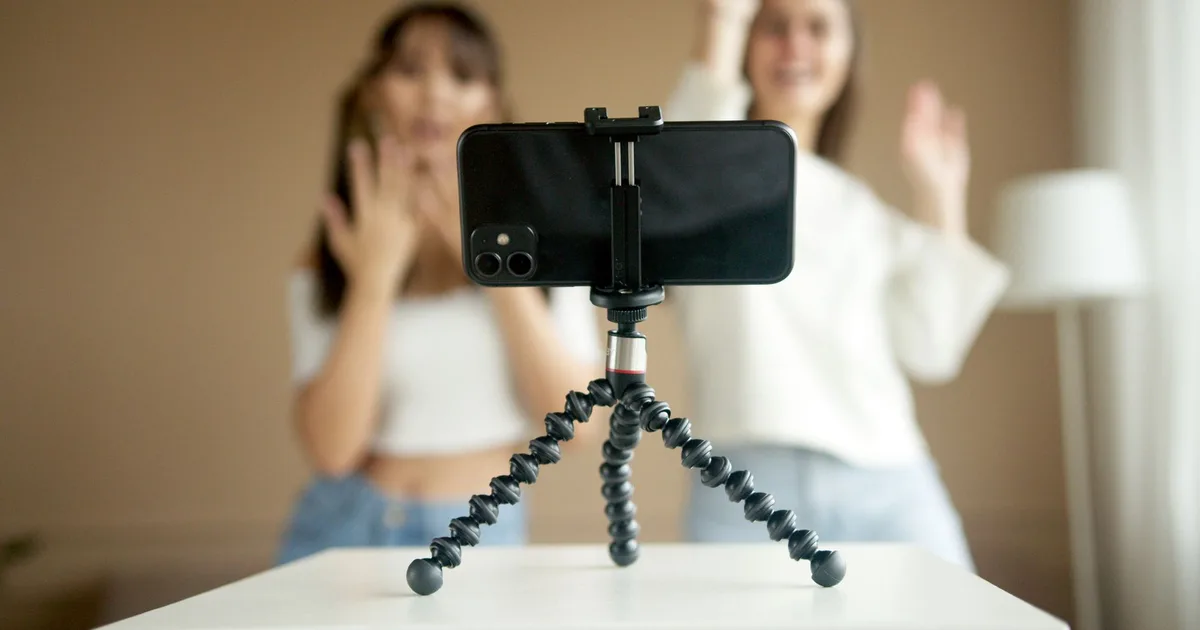
Collaboration is the most reliably underused growth channel on Instagram, particularly for small accounts. The reason is that it works on a signal nothing else does: someone the viewer already trusts is standing next to you, which converts far better than an algorithm deciding you're relevant.
It's also free. The main costs are the awkwardness of asking and the effort of making something good with another person.
The Collab feature does most of the work
Instagram's built-in Collab feature lets you invite another account as a co-author on a feed post or Reel. Once they accept, the post appears on both profiles, under both names, sharing a single set of likes, comments and view counts — and crucially, it's distributed to both audiences' feeds.
That last part is what makes it different from a shoutout or a tag. A tag gets you a handful of profile visits from curious people. A Collab post gets you into the feed of everyone who follows your partner.
To use it: create the post as normal, and on the final screen tap Tag people → Invite collaborator, then search for the account. They get a request and the post goes live on both profiles once accepted. Either party can remove themselves later.
There's a reciprocal courtesy worth observing here: whoever's audience is larger is giving more than they get. Be aware of that when you're the one asking, and make sure the content justifies it.
Picking a partner
The instinct is to aim as high as possible. That's usually the wrong move — an account fifty times your size has no reason to say yes and no interest in the pitch.
The criteria that actually matter:
Adjacent, not identical. If you both do exactly the same thing, your audiences already overlap heavily and there's little to gain — plus you're competitors, which makes it awkward. Adjacent is better: a food photographer and a ceramicist, a running coach and a physio, a designer and a copywriter. Both audiences want what the other has and neither is cannibalizing.
Comparable size. Within roughly 2–3x of your follower count. Above that, the ask is one-sided and you'll be ignored. This is also why the best collabs happen early — everyone at your level is equally invisible and equally motivated.
Engagement, not size. A 4,000-follower account with real comments is a better partner than a 40,000-follower account with dead engagement. You're borrowing trust, and trust is what generates comments.
Compatible audiences. Their followers should plausibly want to follow you. If the overlap is only demographic ("we both have women aged 25–35"), that's not a match — it needs a shared interest.
Finding people
Look in three places:
Your own engaged followers. Check who consistently comments on your posts. Some of them are creators in your space, they already like your work, and they'll say yes.
People your audience follows. Instagram's suggested accounts and the "similar accounts" list on profiles are decent starting points.
Study the niche directly. Go through the accounts already active in your space and look at what they publish, how they engage, and whether they've collaborated before — accounts with a collab history are far likelier to accept. You can browse a public account's Posts and Reels through StoryStalker to review their work and see whether the fit is real before you spend a pitch on them.
That last step matters more than it sounds. A pitch that demonstrates you've actually watched their content converts at a completely different rate to a generic one.
Pitching without being ignored
Most collab DMs fail because they're vague, generic, and ask the other person to do the thinking. "Hey! Love your content, want to collab?" gives them nothing to say yes to.
A pitch that works has four parts and fits in a short paragraph:
- A specific, genuine reference to their work. Not "love your feed" — name the post and say what was good about it.
- The actual idea. Concrete. "A Reel where you shoot the dish and I plate it" beats "some kind of collab."
- What they get. Be honest about the exchange, especially if they're bigger.
- A low-friction next step. "If you're up for it I can shoot my half this week and send it over" removes their effort entirely.
Send it as a DM, not a comment. Keep it short. Expect maybe one in three to convert if the fit is real, and don't take silence personally — most creators have unmanageable inboxes.
Formats that work
Split Reel. Each of you films half, one edits. Cheap, remote-friendly, no scheduling.
Takeover. You each spend a day in the other's Stories. High trust transfer, though Stories reach only existing followers so it converts rather than expands.
Joint carousel. Each contributes slides on a shared topic — "our 10 rules for X." Works well because it's genuinely more useful than either of you would make alone.
Live together. The highest-effort and the highest-trust. Both audiences get notified, and it's the format where people actually get to know you rather than your content.
A shared challenge or series. Recurring collabs compound: each round reaches people who saw the last one.
The format matters less than whether the content is genuinely better for having two people in it. A collab that's just two people saying hello is worse than either of you posting alone — audiences can tell when a collaboration exists for reach rather than for the content, and it lands as noise.
Making it convert
Getting into someone's feed is only half of it. Two things determine whether their followers actually follow you:
Your profile has to catch them. They'll land on it within seconds of the post. If your bio doesn't say what you do and your grid doesn't demonstrate it, they leave. This is the same leak covered in our analytics guide — high profile visits with low follows is a profile problem, not a content problem.
Reply to the comments. A Collab post's comments come from both audiences. Half of them are people who've never heard of you, and a reply from you is a first interaction. Spend the hour.
Afterwards, check how many followers you gained and how many stayed a fortnight later. A good collab keeps most of them, because they arrived through trust rather than through a prize or an algorithm.
Frequently Asked Questions
What is the Instagram Collab feature?
A built-in option that adds another account as a co-author on a post or Reel. The post appears on both profiles with shared likes, comments and views, and is distributed to both audiences' feeds — which is what makes it far more effective than a simple tag.
How do I use Collab on a post?
On the final sharing screen, tap Tag people, then Invite collaborator, and search for the account. They receive a request, and once accepted the post goes live on both profiles.
Who should I collaborate with?
Accounts in adjacent niches rather than identical ones, within roughly two to three times your follower count, with genuine engagement. Adjacent audiences want what the other creator offers without either of you cannibalizing the other.
How do I ask someone to collaborate?
DM them with a specific reference to their work, a concrete idea rather than a vague offer, what they get from it, and an easy next step. Generic "want to collab?" messages are ignored because they ask the other person to do all the thinking.
Do collaborations actually grow your account?
Yes, and the followers tend to stick better than those from giveaways or viral posts, because they arrive through an existing trust relationship rather than through a prize or an algorithmic recommendation.
If you want to learn more about how StoryStalker approaches building tools for public Instagram content, take a look at our about page.